STRICT QUALITY CONTROL SYSTEM

STRICT QUALITY CONTROL SYSTEM

How Much ACR Processing Aid Should You Add? A Practical PVC Troubleshooting Guide
Published by Weifang Fine New Material Co., Ltd. (FINE-ADD) | Technical Insights & Polymer Modification Guide | Updated October 30, 2026
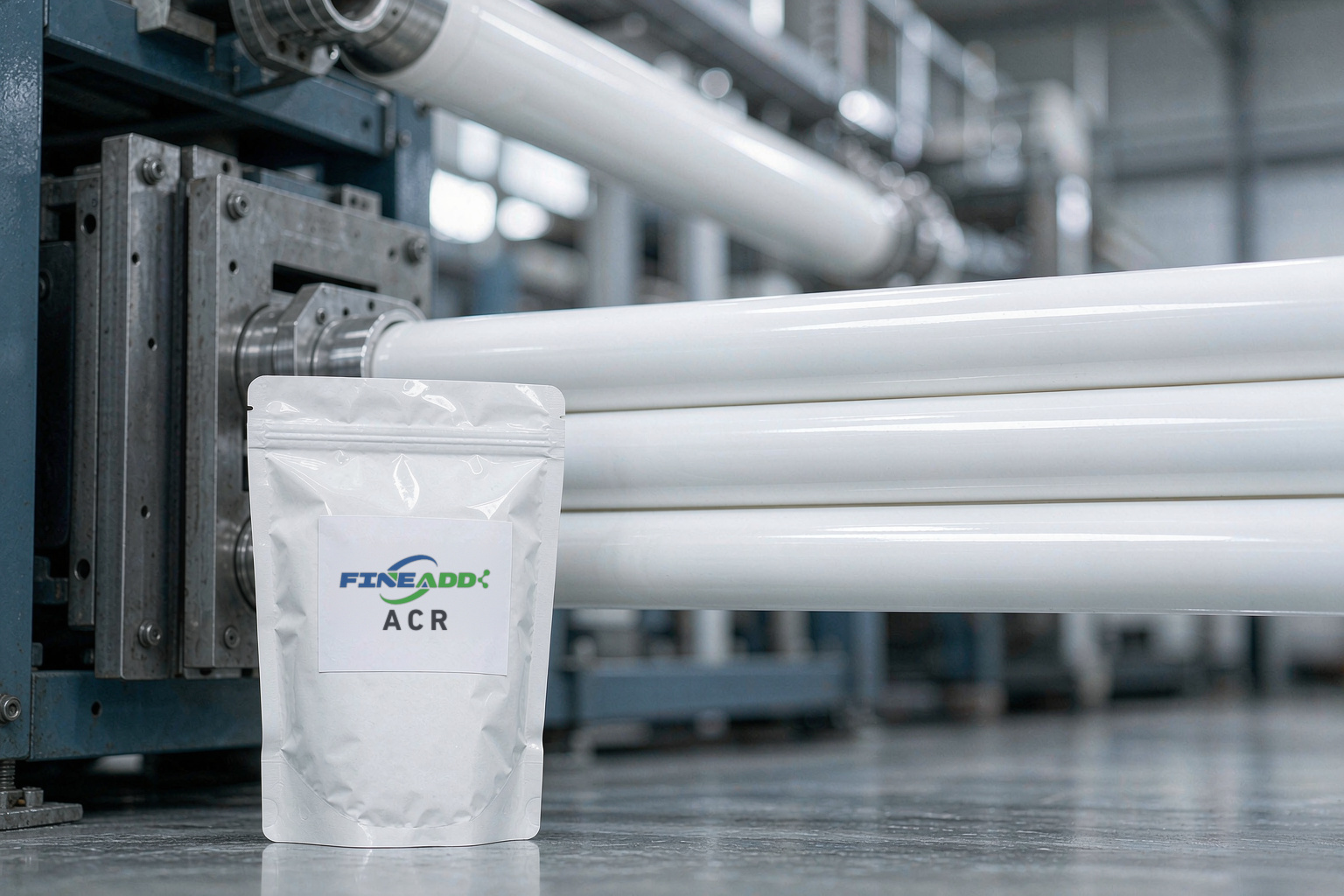
ACR processing aid at work on a PVC pipe extrusion line — smoother melt, stable wall thickness.
Quick Answer:
For most rigid PVC, start with 1.0–2.0 phr of ACR processing aid (parts per hundred resin). Typical starting points: rigid pipe and profiles 1.0–2.0 phr, PVC foam board 4.0–8.0 phr of a high-molecular-weight foam regulator, and transparent sheet/film 1.0–2.0 phr of a transparent grade. Increase ACR when you see melt fracture, sharkskin, poor fusion, or thin/uneven walls; decrease or switch grade when you see plate-out, die drool, or blooming. ACR is a processing aid, not an impact modifier — pair it with CPE 135A, MBS, or acrylic impact modifier for toughness.
New to ACR? Read our technical overview of how acrylic processing aids work in PVC extrusion.
ACR (Acrylic Processing Aid) is a high-molecular-weight acrylic copolymer added to PVC at low levels (typically 0.5–8.0 phr depending on the application). It does not primarily toughen the compound — its job is to make PVC process better:
Accelerates fusion / gelation — brings the PVC melt to a uniform, fully fused state earlier, at lower shear and temperature.
Raises melt strength and elasticity — the melt resists sagging, thinning, and breakup under high output and complex die geometry.
Improves melt uniformity — eliminates unmelted particles and local weak spots that become defects.
Suppresses surface defects — melt fracture, sharkskin, orange peel, and matte surfaces largely disappear.
Stabilizes foam cells — high-MW foam regulators hold expanding gas in rigid PVC foam so cells do not collapse.
The right ACR grade depends on whether you need faster fusion, higher melt strength, foam stability, or clarity. Choosing the grade is as important as the dosage.
These are starting points, not finished recipes. Fillers, lubricant packages, impact modifiers, and line speed all shift the optimum. Always validate on your line and request a formulation review from your supplier.
| Application | Recommended ACR type | Typical dosage (phr) | Why |
|---|---|---|---|
| Rigid PVC pipe | General processing aid | 1.0–2.0 | Stable wall thickness, smooth bore, higher line speed |
| Window / profile (complex shape) | General processing aid | 1.0–2.5 | High melt elasticity for corners and long dies |
| PVC foam board | Foam regulator (high-MW ACR) | 4.0–8.0 | Holds expanding cells, prevents collapse |
| Transparent sheet / film | Transparent processing aid | 1.0–2.0 | Fusion and surface without haze |
| Wood-plastic composite (WPC) | Foam regulator + general | 2.0–5.0 | Melt strength with wood flour / foaming |
| Rigid PVC injection molding | General processing aid | 1.0–2.0 | Fills thin sections, reduces stress marks |
Most "ACR problems" are really dosage or grade mismatches. Use this table to decide what to change before you touch anything else.
| Symptom | Likely cause | ACR-related fix |
|---|---|---|
| Melt fracture / sharkskin (rough surface at high speed) | Low melt strength; too little processing aid; external lubricant too high | Raise ACR to 1.5–2.5 phr; use a higher-MW grade; reduce external lubricant |
| Poor fusion / gelation (unmelted specks, low torque) | Insufficient processing aid; too much external lubricant | Add 0.5–1.0 phr ACR; cut back PE wax / stearic acid |
| Thin or uneven wall thickness; die-swell variation | Low melt elasticity | Increase ACR; it raises melt pressure and wall control |
| Plate-out / die drool (waxy die deposits) | ACR overdose; lubricant overload; grade incompatibility | Reduce ACR by 0.3–0.5 phr; rebalance lubricant; try a lubricant-type ACR |
| Fish eyes / gels / black specks | Contamination, shear overheating, poor dispersion | Raise ACR slightly for homogenization; verify mixing and screen pack |
| Brittle foam edges / cell collapse | Foam regulator too low; melt strength insufficient | Increase foam regulator to 5.0–8.0 phr |
| Orange peel / matte surface | Low melt strength; wrong grade | Raise ACR; select a grade with higher melt elasticity |
If your issue is impact strength (brittle break under drop or impact), ACR will not fix it — that is the job of an impact modifier such as CPE 135A or MBS.
FINE-ADD supplies four ACR processing-aid families; using the wrong one is the most common avoidable mistake:
General Processing Aid — pipes, profiles, injection. Fast fusion, good surface, broad compatibility.
PVC Foam Regulator — very high-MW ACR for foam board and WPC; the only grade that reliably prevents cell collapse.
Transparent Processing Aid — low-haze grade for clear sheet and film; a standard ACR will cloud the product.
PVC Lubricant Processing Aid — combines processing aid with internal lubrication; lowers plate-out risk in sensitive recipes.
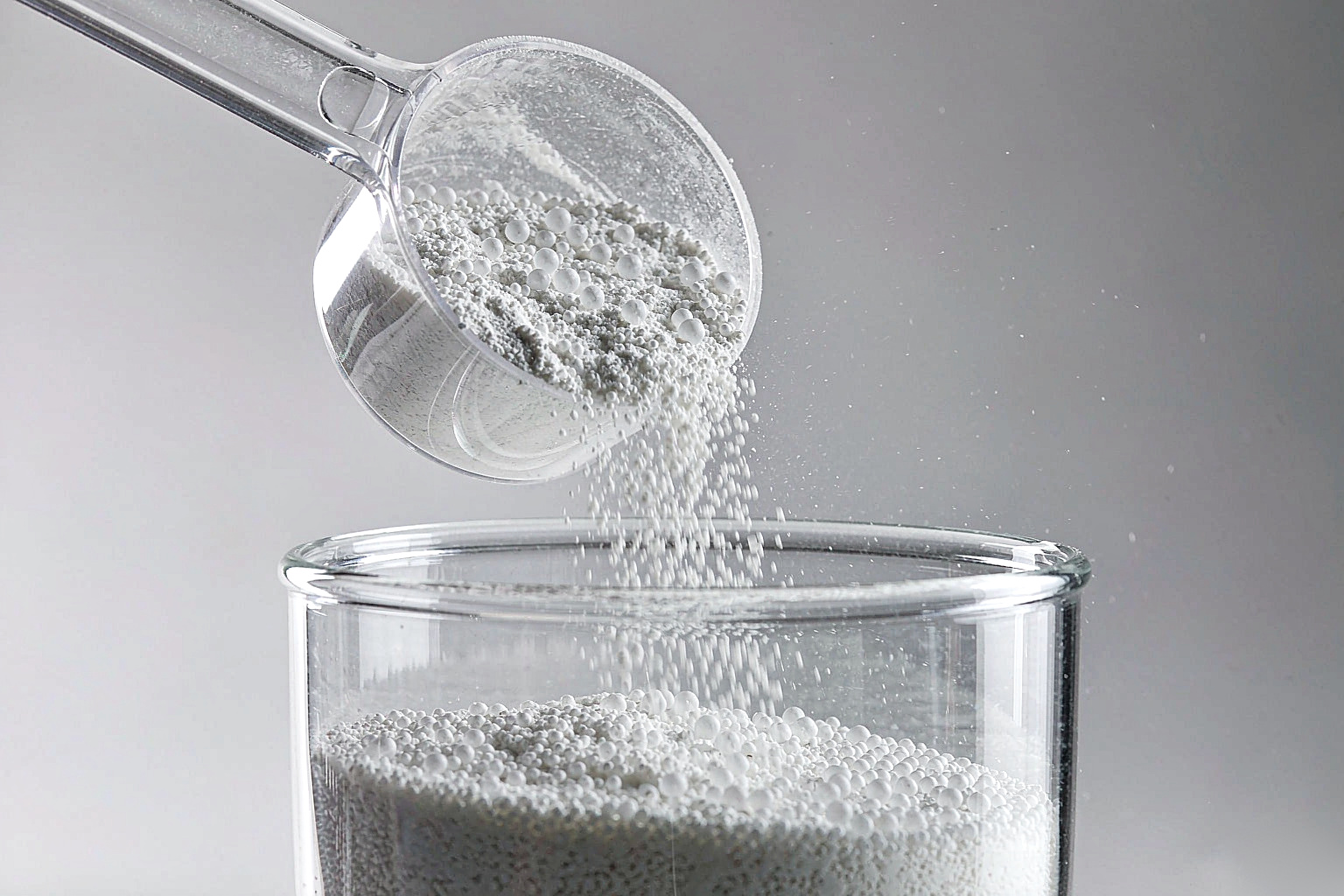
FINE-ADD ACR processing aid — free-flowing acrylic powder for PVC extrusion.
Overdosing. More ACR is not better. Past the optimum it causes plate-out, die drool, and unnecessary cost.
Using general ACR for foam. Foam board needs a foam regulator; a general grade cannot hold the cells.
Treating ACR as an impact modifier. It barely moves impact strength. Keep CPE 135A / MBS for toughness.
Ignoring the lubricant balance. ACR and external lubricant fight each other. Add both blindly and you foul the die.
Wrong grade for transparent products. A standard ACR hazes clear sheet. Use a dedicated transparent grade.
Start at 1.0–2.0 phr for rigid pipe and profiles, 4.0–8.0 phr of a foam regulator for PVC foam board, and 1.0–2.0 phr of a transparent grade for clear sheet. Adjust up for higher line speed or weaker melt, down if you see plate-out.
No. ACR is a processing aid; it improves fusion, melt strength, and surface, but contributes little to impact resistance. For toughness, use CPE 135A, MBS, or an acrylic impact modifier alongside ACR.
Usually the ACR level is too low, the grade's molecular weight is too low for your speed, or external lubricant is too high. Raise ACR to 1.5–2.5 phr, switch to a higher-MW grade, and reduce external lubricant.
A high-molecular-weight foam regulator (4.0–8.0 phr), not a general processing aid. It is the only ACR type that provides enough melt strength to keep foam cells from collapsing.
It can. A standard processing aid adds haze. For transparent sheet and film, use a dedicated transparent processing aid grade at 1.0–2.0 phr.
Plate-out is typically ACR overdose or lubricant overload. Reduce ACR by 0.3–0.5 phr, rebalance the lubricant package, or switch to a lubricant-type ACR processing aid.
Weifang Fine New Material Co., Ltd. (FINE-ADD) manufactures PVC additives — including ACR processing aids, CPE 135A, impact modifiers, and stabilizers — for pipe, profile, foam board, and transparent sheet producers worldwide. Our technical team helps you set the right ACR grade and dosage for your exact formulation and line.
Need a formulation check or samples? Reach FINE-ADD through any channel below:
WEBSITE | PHONE |
Request a TDS, SDS, or free sample for your application — our technical team responds within one business day.
INQUIRE IMMEDIATELY

Chlorinated polymers and PVC additives, formulated in-house and shipped worldwide from Weifang, Shandong.
No.8868 Guting Street, Weifang Economic Development Zone, Shandong Province, P.R.China.
Join our newsletter to stay up to date on features and releases.
By subscribing you agree to with our Privacy Policy and provide consent to receive updates from our company.
©2025 weifang fine new material co.,ltd All Rights Reserved.
Powered by HiCheng
